
Last Updated: November 11, 2026
Quick Summary
To get more customers for spa, start with a complete Google Business Profile, then build steady demand through social media and local groups. Turn each first visit into a repeat booking with a timed follow-up sequence and a clear next appointment.
- Choose the most specific primary category and list each treatment as its own service.
- Post two or three times a week on social media, focusing on useful content.
- Ask satisfied clients for reviews and respond to every review, positive or negative.
- Offer a specific next date before the client leaves, not a general invitation to return.
- Track your rebooking rate, meaning the share of first-time clients who book again within 60 days.
Table of Contents
- Why Your Spa Needs a Steady Flow of New Customers
- Step 1: Set Up and Optimize Your Google Business Profile
- Step 2: Build Spa Marketing Ideas Around Social Media and Local Groups
- Step 3: Launch Introductory Offers and Referral Programs
- Step 4: Manage Spa Reviews and Reputation Management
- Step 5: Turn First Visits Into Repeat Bookings
- Booking Your First 30 Days of Customer Acquisition
- Frequently Asked Questions
Most spa owners lose new customers before they ever get a chance to book a treatment, and a clear plan to get more customers for spa can change that. A prospect searches for a spa on Google Maps, sees a thin profile with three old photos and no recent reviews, and moves on. This guide covers practical tactics to get more customers for spa, starting with the visibility work that drives most local discovery and ending with how to turn a first visit into a repeat booking.
The steps below are ordered on purpose. Fix your local search presence first, then build demand through social media and partnerships, then convert that interest into bookings and loyalty. Each step is designed to be finished in a sitting or two, without technical skills.
Why Your Spa Needs a Steady Flow of New Customers
Repeat clients are valuable, but most spas lose some of them over time. New clients replace the ones who move, switch providers, or simply forget to book. A steady flow of new bookings keeps your schedule full, especially on slower weekdays.
The fastest path to new customers is usually local search. People who want a massage or facial often search "spa near me" and choose from the businesses that appear in Google Maps. Start there.
Step 1: Set Up and Optimize Your Google Business Profile
Your Google Business Profile is usually the first thing a prospect sees when they search for a spa nearby, so treat it as a working page rather than a directory listing. If you would rather have someone handle Google, reviews and local search for you, see done-for-you local visibility services.
Start by claiming or verifying the profile, then work through these areas in order:
- Primary and secondary categories. Choose the most specific primary category that fits your core service, such as day spa or massage therapist, and add secondary categories only where you truly offer that service. Categories affect which searches your listing can appear for.
- Services with names people actually search. Enter each treatment as its own service with a short description. Use the words clients type, such as "deep tissue massage" or "hot stone facial," rather than internal menu codes.
- Service area and location terms. If you serve a defined area, set it accurately. Mention your neighborhood or town naturally in the business description and in service descriptions, but do not stuff keywords.
- Photos by category. Upload photos for the exterior, reception, treatment rooms, and staff, and label them with accurate file names before upload where possible. Add new photos roughly every few weeks so the profile shows recent activity.
- Booking link and messaging. Point the booking button to a page on your own website that lists the same services and prices as the profile. Confirm that the link works on a phone.
Next, check consistency. Compare your business name, address, and phone number on your website, your social profiles, and the major directories. To measure whether these profile changes are working, read local SEO reporting for plumbing companies. A single mismatched suite number or an old phone line creates duplicate listings that split your reviews and weaken local ranking signals.
Watch out: Changing your business name, address, or primary category can reset the trust Google has built for a listing, so make these changes only when you have to and record the date you made them.
Finally, connect the profile to your service pages. If your website has a page for each major treatment that repeats the service name, the neighborhood, and a clear booking path, the profile and website reinforce each other. This is where most spas gain ground, because few competitors maintain matching service pages.
Review this section once a month. Note any changes in profile views, direction requests, and booking clicks, and compare them over three months rather than week to week.
Step 2: Build Spa Marketing Ideas Around Social Media and Local Groups
Social media works best for spas when it shows real results. Post short videos of treatment rooms being prepared, before-and-after skin care photos with client permission, and seasonal menu updates. Consistency matters more than volume: two or three posts a week is enough for most small spas.
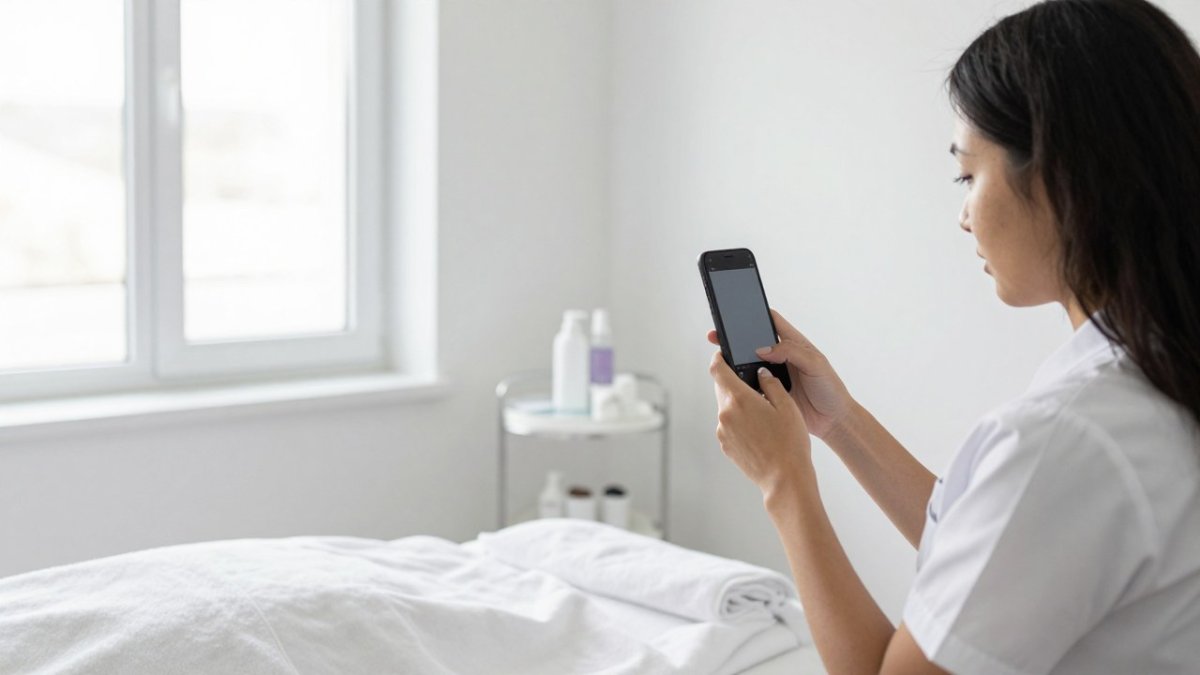
Local groups are another strong channel. Join neighborhood Facebook groups, local business associations, and community event pages. Share useful content, not just promotions. A post about winter skin care tips does more for visibility than a discount alone.
Many spa owners also run giveaways, such as a free express facial for the best local review. Check your local promotion rules before running any contest.
Step 3: Launch Introductory Offers and Referral Programs
A first-visit offer lowers the barrier for someone who has never tried your spa. Keep it specific: a 60-minute massage at a set price, or a discounted first facial for new clients only. Track which offers bring in the most first visits so you can repeat what works.
Referral programs turn happy clients into your best marketers. Give both the referrer and the new client a small credit, such as a discounted add-on service. Make the referral process simple. A printed card at checkout or a link sent by text works well.
Watch out: Heavy discounting can train clients to wait for deals. Use introductory offers to start the relationship, then shift the focus to quality and experience.
Step 4: Manage Spa Reviews and Reputation Management
Reviews influence both search rankings and customer decisions. Ask satisfied clients for a review at the end of their visit or in a follow-up text. Make it easy with a direct link to your Google review form. Consistently inviting feedback after each visit is easier when Vagaro helps keep appointments and follow-ups organized.
Respond to every review, positive or negative. A short, warm reply to a five-star review shows future clients that you care. For a negative review, stay calm, acknowledge the issue, and offer to make it right offline. Future readers judge your spa by how you handle problems, not just by the star rating.
Track your review count and average rating each month. A steady flow of new reviews signals an active business to both Google and customers.
Step 5: Turn First Visits Into Repeat Bookings
Most spa revenue comes from clients who come back, but returning clients rarely happen by accident. The gap between a first visit and a second booking is usually a process gap, and you can design it.
Start with the moment the client is still in the treatment room. Before they leave, the front desk or therapist should offer a specific next date rather than a general invitation. "Would you like to come back in three weeks, on a Tuesday morning?" converts far better than "Let us know when you want to book."
Then build a short follow-up sequence:
- Same day or next day: A brief thank-you text that names the treatment they received and includes your booking link.
- About two weeks later: A message asking how they are feeling and offering two open time slots. Keep it under three sentences.
- About six weeks later, if no booking: A reminder that mentions a specific service they tried, plus a clear reason to return, such as a seasonal add-on.
For clients who never book again, a single recovery message is enough. Acknowledge that life gets busy, make one offer, and stop. Repeated messages drive unsubscribes and complaints.
Track the numbers that show whether the process works. Measure your rebooking rate, meaning the share of first-time clients who book again within 60 days, and compare it month to month. Also track the average time between visits for your regulars. If that gap is growing, your follow-up is slipping before your service is.
A membership or package can support this process, but only if the terms are simple. A monthly package or a tenth-visit card works best when staff can explain it in under a minute and the client can see their progress. State the expiration rules and cancellation terms in writing at the point of sale.
Watch out: Before sending texts or emails, confirm that the client has opted in to marketing messages. Keep a record of consent, and include an easy opt-out in every message to stay compliant with privacy rules that apply in your region.
Running this sequence for one quarter usually gives you enough data to decide what to change, whether that is the timing of the first follow-up, the wording of the offer, or the structure of the package.
The follow-up timing below comes straight from the rebooking process described in this section.
| Stage | When | What to send |
|---|---|---|
| Thank-you text | Same or next day | Name the treatment and include booking link |
| Check-in message | About two weeks later | Ask how they feel and offer two time slots |
| Reminder | About six weeks later | Mention a specific service and a reason to return |
| Recovery message | If no booking after reminder | One offer, then stop |
Booking Your First 30 Days of Customer Acquisition
A realistic plan starts small. In the first week, complete your Google Business Profile and ask recent clients for reviews. In the second week, post three times on social media and join two local groups. In the third and fourth weeks, launch one introductory offer and set up a simple referral card.
Expect gradual results, since local search visibility builds over time. Judge your progress by new profile views, review count, and first-time bookings each month rather than expecting an instant surge.
If you want a clear plan built for your spa, you can compare done-for-you packages and pricing or talk with Arlen Bento Jr. about your local marketing by calling 772-485-8030. For a deeper look at timing, read 7 Real Timelines for How Long Local SEO Takes to Work.
Get more customers for your spa with a clear local search plan. Local Visibility Engine handles the Google, social, and review work so your calendar keeps filling, with no technical skills required.
Frequently Asked Questions
How do I attract more customers to my spa?
Start with the free channels that already put your spa in front of local searchers: a complete Google Business Profile, consistent photos, and recent reviews. Then add a referral incentive and one time-limited introductory offer. Track which channel each booking came from for four weeks so you know where to spend more effort. Most spas find that Google Maps visibility and reviews produce the steadiest new bookings, while promotions create short spikes.
How can a spa turn first-time visitors into repeat clients?
Book the next appointment before the client leaves the treatment room, and send a short follow-up message within 48 hours that thanks them and offers a specific date. Use a simple membership or bundled package for clients who return every few weeks. Ask for feedback at the same time, so you can fix problems before they lead to a lost client. Repeat bookings usually cost far less to win than new ones.
How can online reviews help a spa get more customers?
Reviews influence both ranking in Google Maps results and whether a searcher chooses your spa over a competitor. Ask satisfied clients for a review shortly after their visit, with a direct link to your Google Business Profile. Reply to every review, positive or negative, using the client's first name and the specific service mentioned. Reply patterns show prospective clients how you handle problems.
What marketing strategies work best for a spa?
The strongest combination for most local spas is a well-optimized Google Business Profile, regular before-and-after or treatment photos on social media, a referral program, and one introductory offer per quarter. Partnerships with nearby salons, gyms, yoga studios and bridal shops can add steady referrals. Prioritize the two channels that produce the most booked appointments, and drop the rest until you have capacity to test them.

Frequently asked questions
How do I attract more customers to my spa?
Start with the free channels that already put your spa in front of local searchers: a complete Google Business Profile, consistent photos, and recent reviews. Then add a referral incentive and one time-limited introductory offer. Track which channel each booking came from for four weeks so you know where to spend more effort. Most spas find that Google Maps visibility and reviews produce the steadiest new bookings, while promotions create short spikes.
How can a spa turn first-time visitors into repeat clients?
Book the next appointment before the client leaves the treatment room, and send a short follow-up message within 48 hours that thanks them and offers a specific date. Use a simple membership or bundled package for clients who return every few weeks. Ask for feedback at the same time, so you can fix problems before they lead to a lost client. Repeat bookings usually cost far less to win than new ones.
How can online reviews help a spa get more customers?
Reviews influence both ranking in Google Maps results and whether a searcher chooses your spa over a competitor. Ask satisfied clients for a review shortly after their visit, with a direct link to your Google Business Profile. Reply to every review, positive or negative, using the client's first name and the specific service mentioned. Reply patterns show prospective clients how you handle problems.
What marketing strategies work best for a spa?
The strongest combination for most local spas is a well-optimized Google Business Profile, regular before-and-after or treatment photos on social media, a referral program, and one introductory offer per quarter. Partnerships with nearby salons, gyms, yoga studios and bridal shops can add steady referrals. Prioritize the two channels that produce the most booked appointments, and drop the rest until you have capacity to test them.